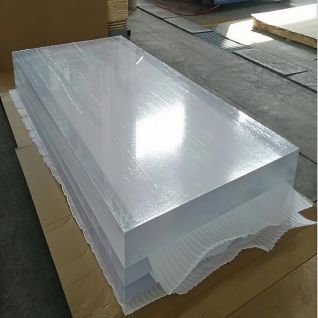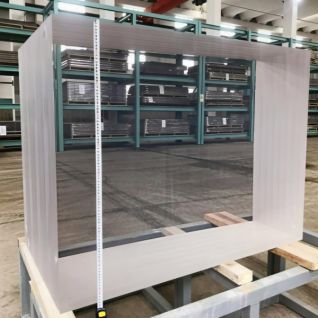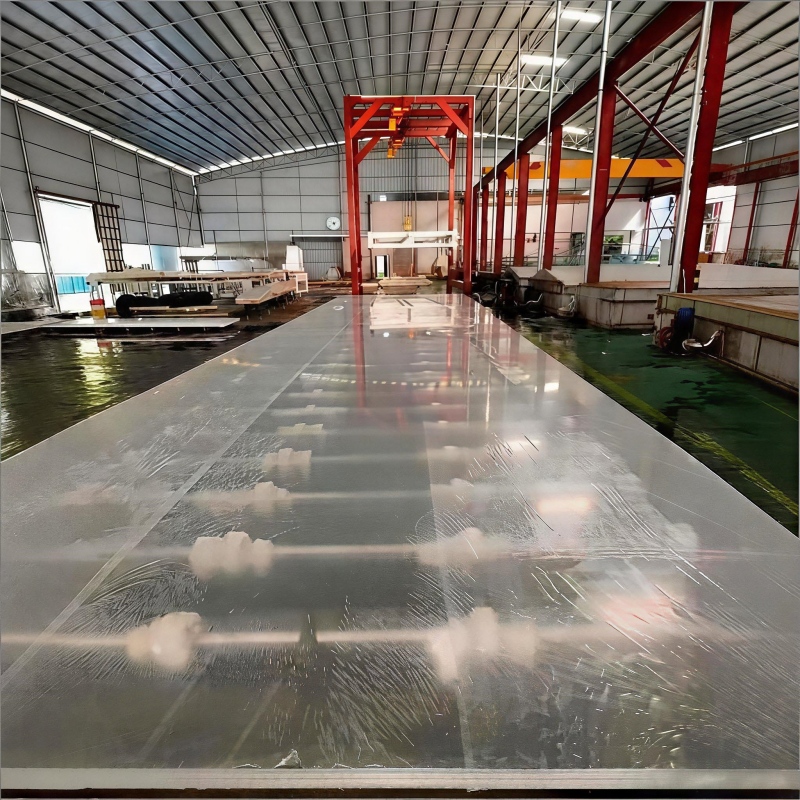
Cast acrylic thick panels are produced by pouring liquid MMA monomer into molds and curing it slowly through bulk polymerization. Compared with extruded acrylic, cast panels have longer molecular chains and a denser structure, delivering better clarity, weather resistance, and processing stability.
Typical applications include oceanarium viewing windows, acrylic pool walls, large fish tanks, architectural skylights, signage, and industrial observation windows.
How the Panel Is Made
The core of cast thick panel production is “slow curing.”
Liquid MMA monomer is poured into a mold and reacts slowly in a temperature-controlled polymerization oven. If the temperature is too high, the reaction is too fast, and bubbles and internal stress may form. If it is too low, polymerization is incomplete, and the panel may be soft with insufficient transmittance. Thick panels are especially demanding—the thicker the panel, the more heat is generated during polymerization, and if that heat cannot dissipate, the core may develop defects.
After polymerization, the panel undergoes annealing to relieve residual internal stress. Panels that are not annealed, or not annealed properly, are prone to chipping during cutting, cracking during drilling, and gradual deformation after installation under temperature changes. Many “unexplained” acrylic cracks trace back to this step.
What It Can Be Made Into
Oceanarium viewing windows: large single panels plus seamless bonding for full transparent walls
Acrylic pool walls: thick panels thermoformed into curves with nearly invisible joints
Large fish tanks: high clarity, water-pressure resistant, available in cylinder, square, and freeform shapes
Architectural skylights: lightweight alternative to glass, thermoformable into domes
Signage: engraved, polished, UV-printed for light boxes and channel letters
Industrial observation windows: chemical-resistant, custom cutouts and slots available
Jiangsu Xitu Acrylic Materials Co., Ltd. is located in Yancheng, Jiangsu Province, with a registered capital of RMB 10 million. The company covers an area of approximately 40 mu and has a professional team of more than 100 employees, with an annual production capacity exceeding 2,000 tons ....[ Read More >>]