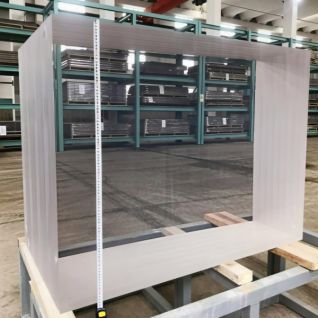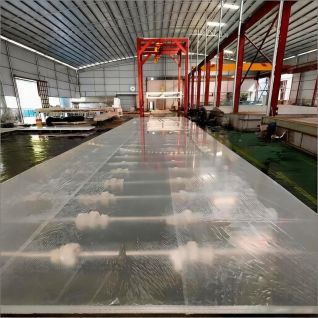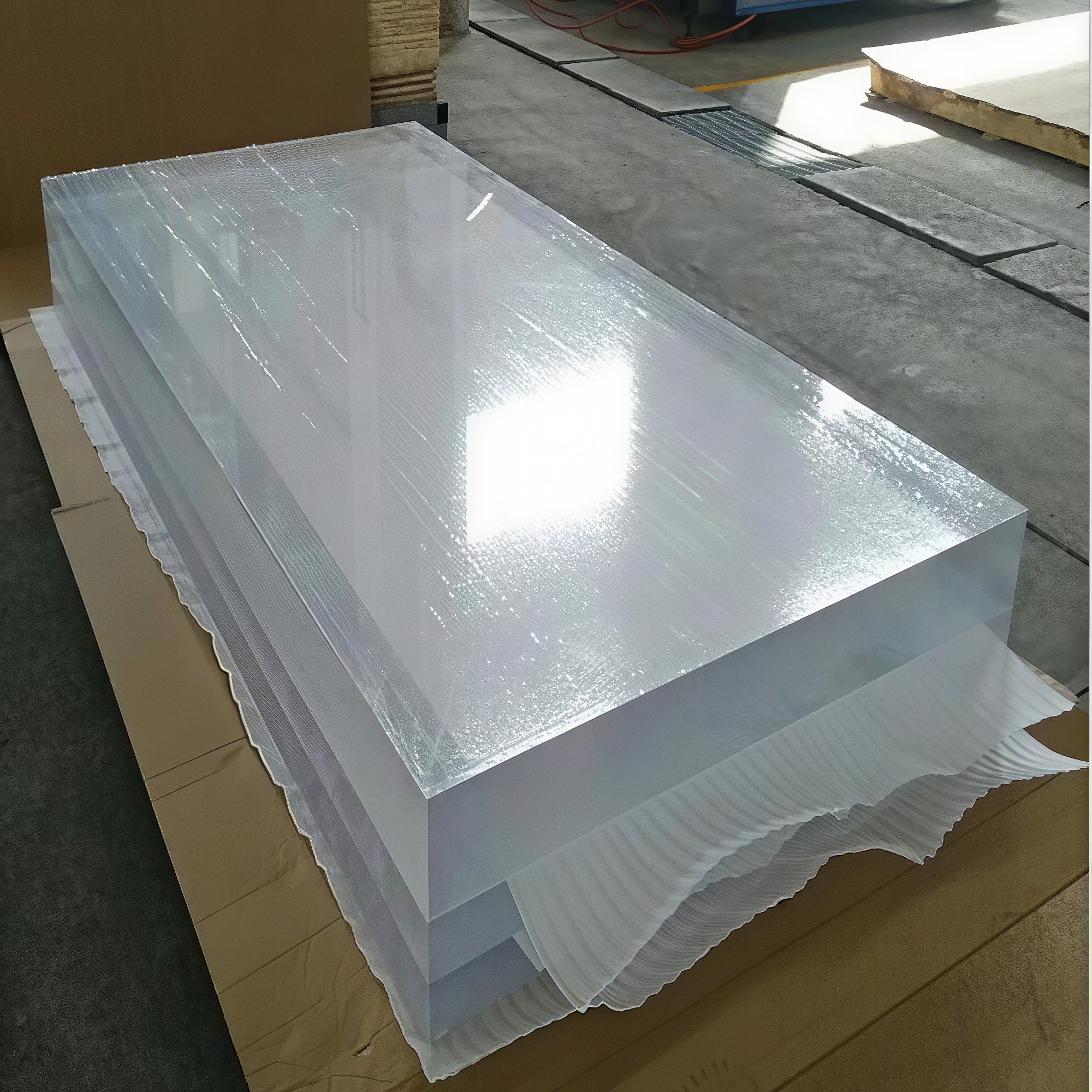
Flame-retardant cast acrylic thick panels are engineered for projects that require both high transparency and fire safety compliance. Through a modified casting formulation, the panels achieve a B1 flame-retardant rating while maintaining ≥92% light transmittance and the structural advantages of cast PMMA.
Unlike standard acrylic, flame-retardant cast panels resist rapid flame spread and self-extinguish after the ignition source is removed. They are suitable for commercial interiors, public transport facilities, exhibition spaces, and architectural features where fire safety regulations apply.
Available in thickness from 20–200 mm, with custom cutting, polishing, and thermoforming options.
1. B1 Flame-Retardant Rating
Meets B1 (flame-retardant) classification for building materials. Resists rapid flame spread and self-extinguishes after ignition source removal.
2. High Transparency Retained
Light transmittance ≥92%, haze ≤1.5%. Fire safety does not come at the cost of visual clarity.
3. Cast PMMA Structure
Long molecular chains and dense structure. Better weather resistance and surface hardness than extruded panels.
4. Low Smoke and Non-Toxic Combustion
Combustion products mainly carbon dioxide and water. No corrosive hydrogen chloride gas, unlike PVC.
5. Fabrication-Friendly
Supports cutting, CNC machining, polishing, and thermoforming. Suitable for custom architectural and display components.
6. Compliance Support
Test reports for flame-retardant rating and smoke density available for project submission and fire inspection.
Commercial interiors: partitions, feature walls, ceiling panels in malls and office buildings
Public transport facilities: station partitions, platform signage, protective panels
Exhibition and museum spaces: display structures requiring fire safety compliance
Hospitality projects: lobby features, bar counters, decorative panels
Architectural glazing: interior skylights, canopies, and light wells with fire code requirements
Requirement Communication: Provide dimensions, thickness, application, fire rating requirement, and drawings.
Solution Design: Confirm formulation, thickness, and fabrication plan based on fire code and structural needs.
Production & Manufacturing: Casting → annealing → cutting → polishing → flame-retardant performance inspection.
Packaging & Shipping: Professional export packaging with test report and compliance documents.
On-Site Guidance: Installation recommendations for fire-rated assemblies.
Documentation: Flame-retardant test report, smoke density data, and material certificate provided for project submission.
Jiangsu Xitu Acrylic Materials Co., Ltd. is located in Yancheng, Jiangsu Province, with a registered capital of RMB 10 million. The company covers an area of approximately 40 mu and has a professional team of more than 100 employees, with an annual production capacity exceeding 2,000 tons ....[ Read More >>]